Passa al contenuto principale Salta alla ricerca Passa alla navigazione principale
Menu

Relè di blocco / interfaccia / commutazione

Collegamenti tra logica e carico

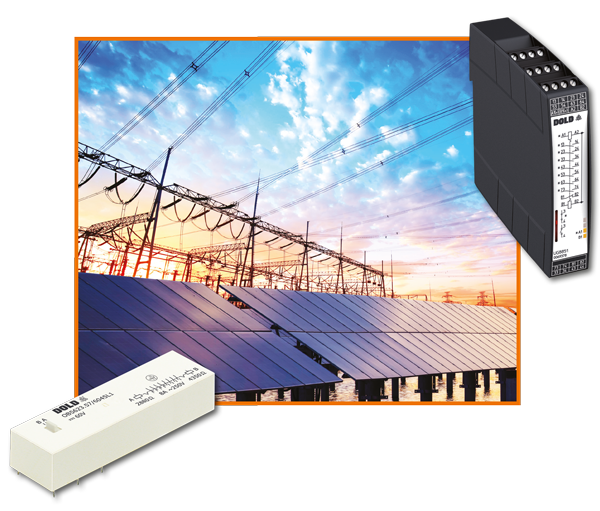
I relè a levetta, di accoppiamento e di commutazione DOLD sono la prima scelta per tutte le applicazioni di interfaccia nei sistemi di controllo più esigenti. Collegano il livello logico altamente sensibile dell'SPS, di un sistema a scaffale o di un computer di processo con il funzionamento grezzo dei livelli di potenza di una macchina. L'installazione e la manutenzione dei relè possono essere eseguite in modo rapido grazie alle prese a innesto a scatto sulla guida top-hat. Un ulteriore vantaggio: non sono sensibili alle sovracorrenti e/o ai sovraccarichi e sono molto meno costosi dei semiconduttori con frequenza di commutazione medio-bassa.

Highlights

Product Finder

Filtro

Latching relay AD 8851
  • Corrente termica Ith max.: 8 A
  • Larghezza: 45 mm
  • Tensione nominale: AC , DC
Stepping relay BA 7632
  • Circuito di protezione all'ingresso della bobina: Yes
  • Corrente termica Ith max.: 10 A
  • Larghezza: 45 mm
  • Tensione nominale: AC , DC
Contact protection relay BA 7961
  • Corrente termica Ith max.: 5 A
  • Larghezza: 45 mm
  • Tensione nominale: AC/DC
Interface relay CA 3056
  • Circuito di protezione all'ingresso della bobina: Yes
  • Comando iniziatore (sensore): Yes
  • Corrente termica Ith max.: 5 A
  • Larghezza: 11,5 mm
  • Tensione nominale: AC , AC/DC
Interface relay CB 3056
  • Circuito di protezione all'ingresso della bobina: Yes
  • Comando iniziatore (sensore): Yes
  • Corrente termica Ith max.: 5 A
  • Larghezza: 11,5 mm
  • Tensione nominale: AC , AC/DC
Interface relay CB 3057
  • Comando iniziatore (sensore): Yes
  • Corrente termica Ith max.: 5 A
  • Larghezza: 11,5 mm
  • Tensione nominale: AC , AC/DC
Interface relay CC 3056
  • Circuito di protezione all'ingresso della bobina: Yes
  • Comando iniziatore (sensore): Yes
  • Corrente termica Ith max.: 5 A
  • Larghezza: 11,5 mm
  • Tensione nominale: AC , AC/DC
Interface relay IG 3051
  • Corrente termica Ith max.: 3 A
  • Larghezza: 8,8 mm
  • Tensione nominale: AC , AC/DC
Interface relay IK 3050
  • Circuito di protezione all'ingresso della bobina: Yes
  • Corrente termica Ith max.: 5 A
  • Larghezza: 17,5 mm
  • Tensione nominale: AC , AC/DC
Interface relay IK 3070
  • Circuito di protezione all'ingresso della bobina: Yes
  • Comando iniziatore (sensore): Yes
  • Larghezza: 17,5 mm
  • Tensione nominale: AC , DC
Interface relay IK 3076
  • Circuito di protezione all'ingresso della bobina: Yes
  • Comando iniziatore (sensore): Yes
  • Corrente termica Ith max.: 10 A
  • Larghezza: 17,5 mm
  • Tensione nominale: AC , AC/DC , DC
Input-Output interface relay IK 8701
  • Circuito di protezione all'ingresso della bobina: Yes
  • Comando iniziatore (sensore): Yes
  • Corrente termica Ith max.: 16 A
  • Larghezza: 17,5 mm
  • Tensione nominale: AC , AC/DC , DC
Interface relay IK 8802
  • Corrente termica Ith max.: 10 A
  • Larghezza: 17,5 mm
  • Tensione nominale: AC/DC
Input-Output interface relay IL 8701
  • Circuito di protezione all'ingresso della bobina: Yes
  • Comando iniziatore (sensore): Yes
  • Corrente termica Ith max.: 16 A
  • Larghezza: 35 mm
  • Tensione nominale: AC , AC/DC , DC
Input-Output interface relay IN 8701
  • Circuito di protezione all'ingresso della bobina: Yes
  • Comando iniziatore (sensore): Yes
  • Corrente termica Ith max.: 16 A
  • Larghezza: 52,5 mm
  • Tensione nominale: AC , DC
Interface relay MK 3046
  • Corrente termica Ith max.: 5 A
  • Larghezza: 22,5 mm
  • Tensione nominale: DC
Interface relay MK 3047
  • Corrente termica Ith max.: 6 A
  • Larghezza: 22,5 mm
  • Tensione nominale: DC
Interface relay MK 8804N
  • Circuito di protezione all'ingresso della bobina: Yes
  • Comando iniziatore (sensore): Yes
  • Corrente termica Ith max.: 5 A
  • Larghezza: 22,5 mm
  • Tensione nominale: AC , AC/DC
Latching relay MK 8852
  • Corrente termica Ith max.: 6 A
  • Larghezza: 22,5 mm
  • Tensione nominale: AC/DC
Interface relay ML 3045
  • Corrente termica Ith max.: 5 A
  • Larghezza: 22,5 mm
  • Tensione nominale: AC , AC/DC
Interface relay ML 3059
  • Comando iniziatore (sensore): Yes
  • Corrente termica Ith max.: 5 A
  • Larghezza: 22,5 mm
  • Tensione nominale: AC/DC
Interface relay UG 3076/007
  • Corrente termica Ith max.: 2,5 A
  • Larghezza: 22,5 mm
  • Tensione nominale: AC/DC , DC
Diode module UG 5122
  • Larghezza: 22,5 mm
Latching relay UG 8851
  • Circuito di protezione all'ingresso della bobina: Yes
  • Corrente termica Ith max.: 6 A
  • Larghezza: 22,5 mm
  • Tensione nominale: AC/DC

Koppelrelais - Bindeglieder zwischen Logik und Last

Elektronische Steuerungen sind seit langem fester Bestandteil moderner Automatisierungstechnik. Bereits Anfang der 70er Jahre lösten sie nach und nach die bis dahin üblichen Schütz- und Relaissteuerungen ab. Damit reduzierte sich die Leistungsaufnahme der mit Kleinspannungen arbeitenden Steuerungen auf ein Minimum. Am Energiebedarf der Leistungsebene, zum Antrieb von Motoren, Magnetkupplungen oder Hydraulikzylinder, hat sich jedoch bis heute nichts geändert. Sie benötigen nach wie vor eine entsprechend hohe elektrische Energie.

Koppelrelais übernehmen deshalb die erforderliche Anpassung von Logik- und Leistungsebene. Außerdem sorgen sie für eine sichere Trennung. Damit sind Koppelrelais die idealen Bindeglieder zwischen der hochempfindlichen, nahezu leistungslos arbeitenden Logikebene einer SPS, eines Regelsystems oder Prozessrechners und dem rauhen Betrieb an der Maschine.

Kipprelais für Schaltanlagen der Energietechnik - Kipprelais UG 8851

Das Kipprelais UG 8851 besitzt einen großen AC/DC-Nennspannungsbereich. Kurze Schaltimpulse von einigen Millisekunden bringen das Kipprelais in eine definierte Schaltstellung. Zum Ändern des Schaltzustandes ist nur eine geringe Nennleistung notwendig. Energie zum Halten des Schaltzustandes wird nicht benötigt. Das ist energieeffizient und reduziert die Eigenerwärmung. Bei Ausfall der Versorgungsspannung verbleibt das Relais definiert in seiner Schaltstellung. Die Besonderheit der zwangsgeführten Kontakte (IEC 61810-3) ermöglicht die zuverlässige Abfrage der Kontaktstellung.

Fachbeitrag - Bistabiles Schaltverhalten mit zwangsgeführten Kontakten

Effizienz und Zuverlässigkeit unter der Haube

Fachbeitrag Bistabile Relais

Bistabiles Schaltverhalten mit zwangsgeführten Kontakten Fachbeitrag (pdf)